

Selling a harness is not selling fall protection
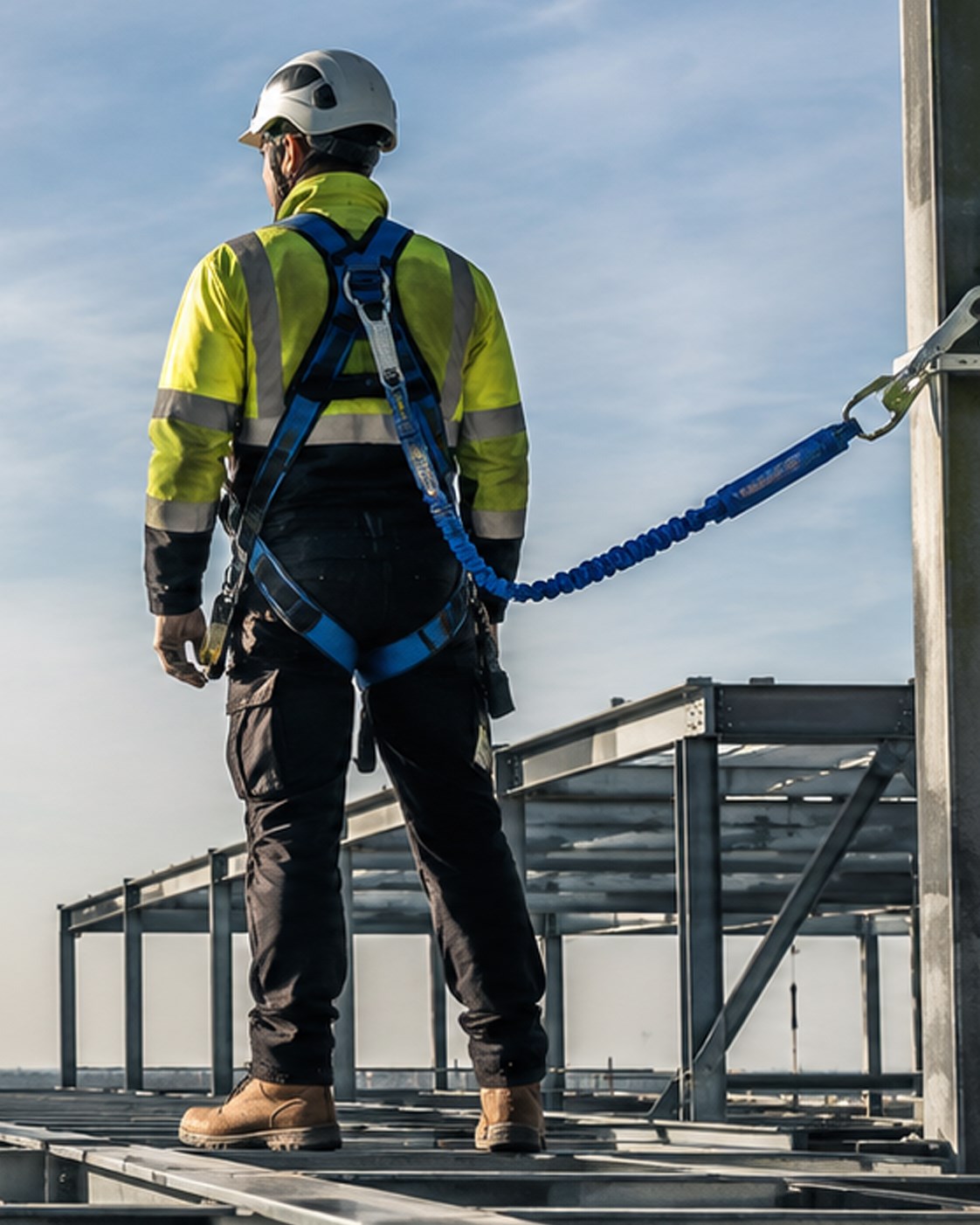
A fall arrest harness on its own does very little. To stop a fall safely it needs four things working together: a properly fitted harness, a correctly specified lanyard, a rated anchor point and a rescue plan. Miss any of those and the system fails — sometimes fatally.
The harness itself is the most visible part of the system, and the easiest to get wrong.
Standard harnesses are designed around an average adult male torso. For workers outside that average — smaller builds, larger builds, different body shapes — a harness bought off the shelf can sit wrong on the body. When that happens, the dorsal D-ring shifts out of position, the chest strap rides too high or too low, and the impact load of an arrested fall lands somewhere it was never meant to land.
NIOSH research has linked poor harness fit directly to reduced suspension tolerance — the window before suspension trauma becomes life-threatening. A harness that fits buys time. A harness that doesn't, costs it.
Fit is not a comfort issue. It is a safety outcome.
The group most at risk
There is another number in the HSE data that gets less attention. Of the 35 fall fatalities last year, 23 were self-employed workers. Just 12 were employees.
Self-employed workers make up around 15 per cent of the workforce. They accounted for 40 per cent of all fatal injuries.
These are often the people doing the most exposed work — roofing, scaffolding, fit-out, maintenance — on the smallest jobs, with the least induction and the kit they bought themselves. They are also part of the wider workforce that principal contractors, site managers and clients want to keep safe on their sites.
If your fall protection programme focuses only on direct employees, the HSE data points to where the risk still sits.
What good actually looks like
Three things, in this order:
- Fit the person, not the average. Every worker who'll be wearing a harness on your site needs it fitted to them by someone trained to do it — not handed a size medium from the stores. For our key account clients, we provide on-site fitting as part of the height safety service.
- Build the system, not just the kit. Harness, lanyard, anchor, clearance, rescue. Specify the system for the task, not the task to the system. Our advisors carry out site audits to check what you have actually adds up to safe fall arrest.
- Train the wearer, not just the buyer. A correctly specified harness in the back of a van is not fall protection. Toolbox talks at height — short, practical, on site — close the gap between the kit being supplied and the kit being used properly. We deliver these free of charge, in partnership with our supplier partners, to all clients.
The bottom line
The HSE numbers are not getting worse. They are not getting much better either. Over the last five years, falls from height have killed roughly one construction worker every two and a half weeks.
Most of those workers were wearing fall protection. It just wasn't enough on its own.
If your sites involve work at height, the questions worth asking aren't about which harness to buy. They are: does it fit the person wearing it, is it part of a complete system, and has the wearer been trained to use it?
We can help you answer all three.